

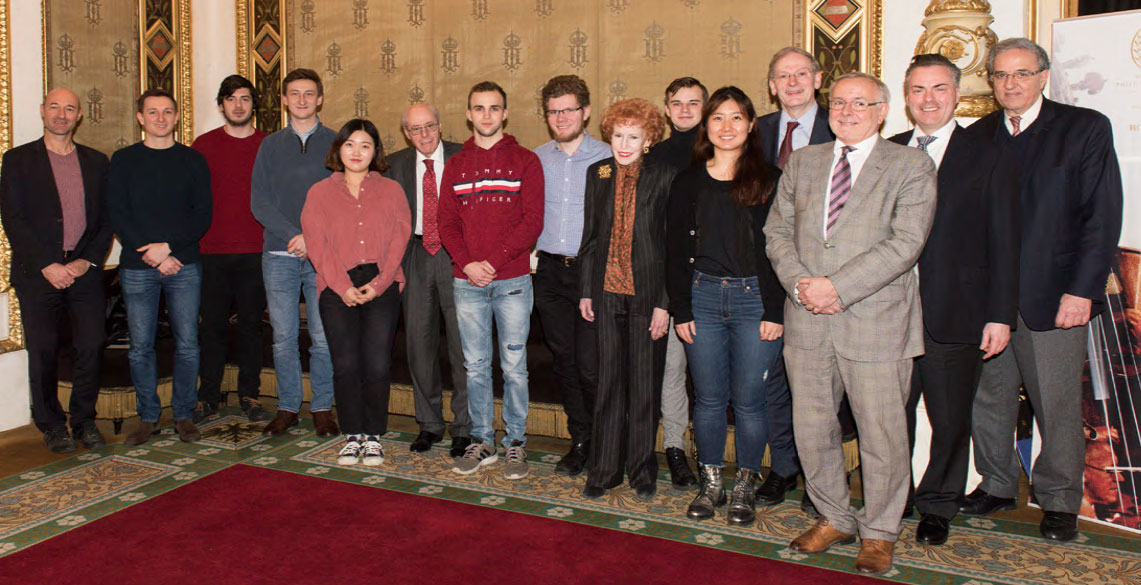
 Vienna Philharmonic Society Board Member Nizam Kettaneh (far right),
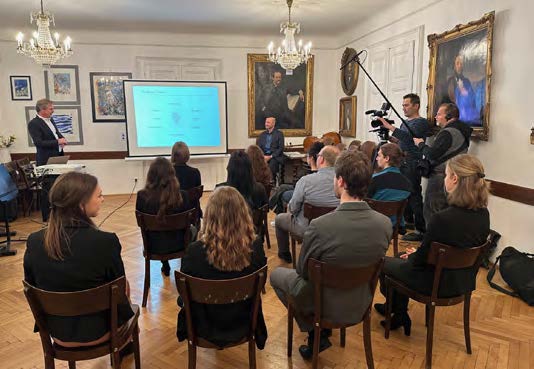
VPS Chairman Marifé Hernández and Academists at the Role of Art in Society seminar.
Media & Marketing Workshop
Savvy navigation of modern media is essential in the publicity of the Orchestra and for individual musicians as they develop their personal brand. Guidance provided is designed to be both separate and inclusive of their association with chamber music groups and orchestras.
Music and Medicine
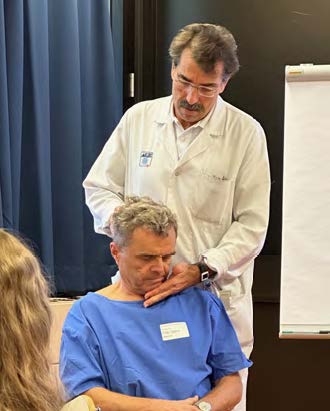
Medical professionals make presentations on the intersection of medicine and education as well as physiotheraputical recommendations to address and prevent occupational injuries related to improprer posture and repetitive motions.
History of the Orchestra
Archivist Sylvia Kargl presents programs featuring pictures and artifacts on the 182-year history of the Orchestra and its many close relationships with classical musical icons, including Beethoven and Mahler. The soul and emotion of the Orchestra are informed beyond their technical expertise through this rich history.
Politics and Society
Music and culture are essential and integral aspects of the Austrian National Identity. Dr. Heinz Fischer, former President of Austria, speaks of their influence during his 12 years in office as well as in the larger history of Austria.
Role of Arts in Society
In the aftermath of the French Revolution, Napoleonic wars, and the resulting social and institutional changes in Europe, the role of musicians in society evolved from employees of the nobility or the Church to independent artists playing in public concert halls. These seminars examine how musicians have the ability to positively influence business and political culture by communicating values that influence policy and social choices, including cohesiveness, by bringing people together despite cross-cultural and social differences.
Vienna and Austrian Arts and Culture
Academists are introduced to the rich local art, music and cultural performances and exhibitions of Vienna and Austria through private programs and excursions.
These programs are in partnership with the Chumir Foundation.
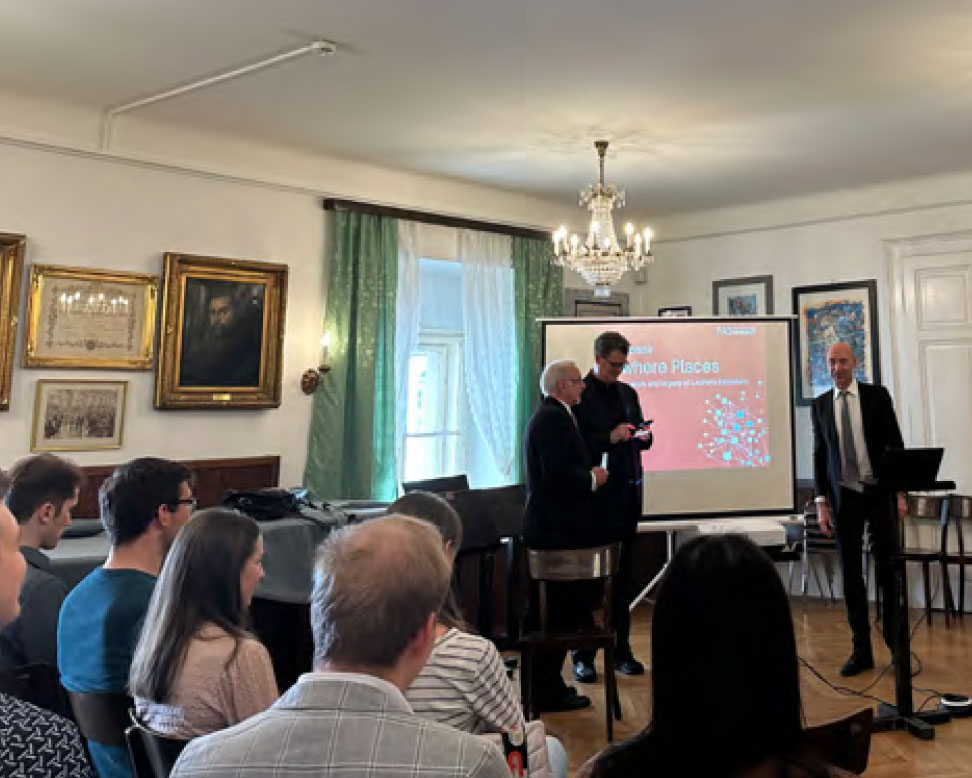
Maestro Leonard Bernstein enjoyed a nearly 25-year relationship with the Orchestra. Dr. Harald Katzmair shared Bernstein’s commitment to using music as a bridge between musical genres and people with differing levels of education and political viewpoints as well as to help overcome social inequality and stereotypes.
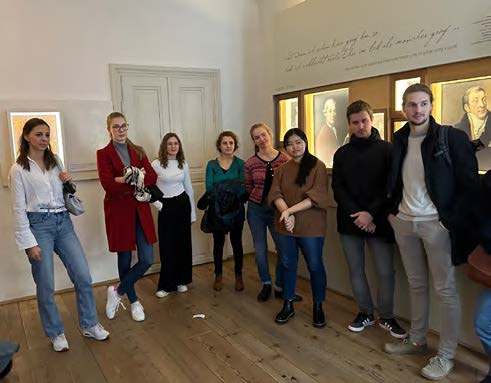
A visit to the Mozart Museum in Vienna introduced the Academists to the life of the composer in the home in which he and his family lived from 1784 to 1787. Exhibits detailed the political, social, literature, scientific and fashion influences of the time as he composed the world-famous opera “Le Nozze di Figaro” and three of the six Haydn Quartets.
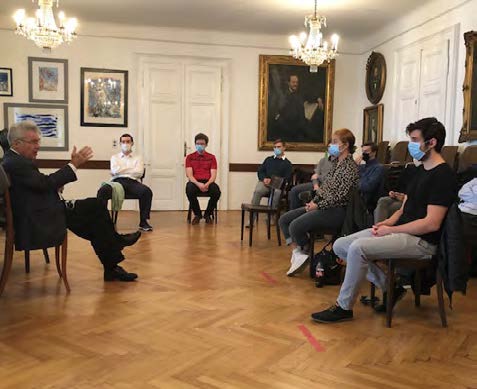
Former President of Austria, Dr. Heinz Fischer, shares his knowledge of the intersection of music and culture to the larger history of Austria in their contemporary and historical contexts.
Ferdinand von Strantz, CEO of Highlight Event AG, instructs the Academists on the importance and manner of effective communication as it reflects upon their own personal brand as well as the Orchestra in today’s social media environment.
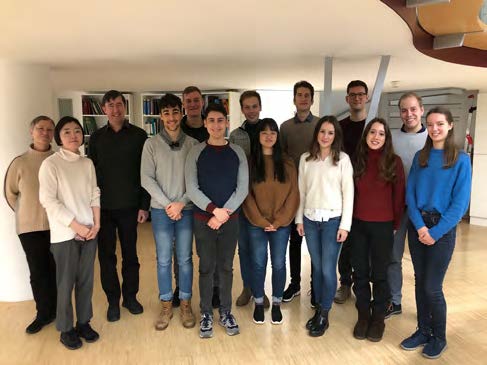
Orchestra Archivist Silvia Kargyl shares the rich history and tradition of the Orchestra since its founding by Otto Nicolai in 1842. Their unique structure of self- funding, self-governing and working with the world’s best conductors each year is part of their mission of excellence to be artistically worthy of the performances and composers that have made Vienna the capital city of classical music.
“Dr. Stertz meets with us twice a year on the importance of taking care of ourselves. Too few of us are aware of the physical and life-long impacts of playing and performing. He teaches us stretches that are commonly practiced in physical therapy to help us avoid injuries as well as general health practices that will allow us to continue performing at our best.” – Annette Jakovčić ’24 USA
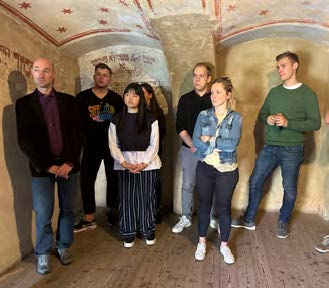
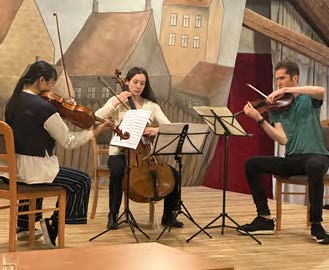
In May 2023, the Academists visited the site of the Terezin concentration camp within the walls of the fortress Theresienstadt, outside of Prague, and performed a concert in honor of those detained. Unlike other camps, scholars, philosophers and musicians, some of whom had achieved international renown, were detained at Terezin as the Nazis attempted to show the world this camp as a positive (though inaccurate) model of how they were treating everyone in all the camps. In an effort to make their situation more bearable, the inhabitants sang in choruses, played concerts and composed music.
“We had the honor of performing Gideon Klein’s string trio in Theresienstadt. This was a very emotional and eye-opening experience. Gideon Klein is an example of so many gifted musicians that were situated in the camp-ghetto before being sent off to Auschwitz or other concentration camps. It is so hard to grasp that Klein was only 25 when he was killed. The string trio that he wrote during his time there shows the potential of what could have been a significant contribution to the music world, along with other great composers that were there, including Pavel Haas and Victor Ullman.” – Annette Jakovčić ’24 USA
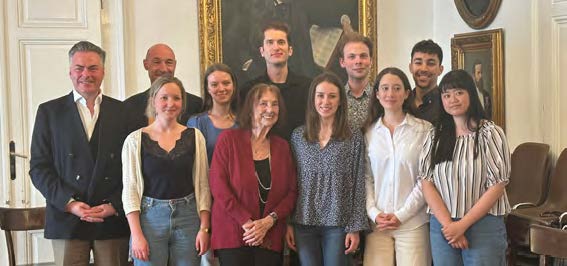 “As a Jewish American, it was an incredibly important and meaningful experience for me to visit Terezin and hear Mrs. Scheiderbauer’s account of having been detained there as a young girl.” – Robert Sanders ’23 USA
Elisabeth Scheiderbauer, 87, a survivor of the Terezin concentration camp where she was detained from the age of 7 to 9, shared her experience within the camp and how, after she and her family were liberated, she turned to a career in dance, where religion and social class were not important.